



Deicing Liquid Potassium Acetate for Fast Runway Ice Removal
When a winter storm comes through, every minute that a runway is closed is a serious operational and safety risk. Because it works quickly, protects infrastructure, and meets strict environmental standards, deicing liquid potassium acetate has become the preferred runway treatment at major airports throughout North America and Europe. The non-chloride fluid has the molecular formula CH₀COOK (CAS 127-08-2) and can freeze at temperatures as low as -60°C (-76°F). It is colourless and slightly acidic, and it works well as an anti-icing agent where chloride salts fail. We make this solution at SHANXI ZHAOYI CHEMICAL, which has over 35 years of experience in acetate chemistry. We make it to a concentration of 50–60% w/w.
Understanding Potassium Acetate as a Deicing Liquid
Chemical Identity and Physical Properties
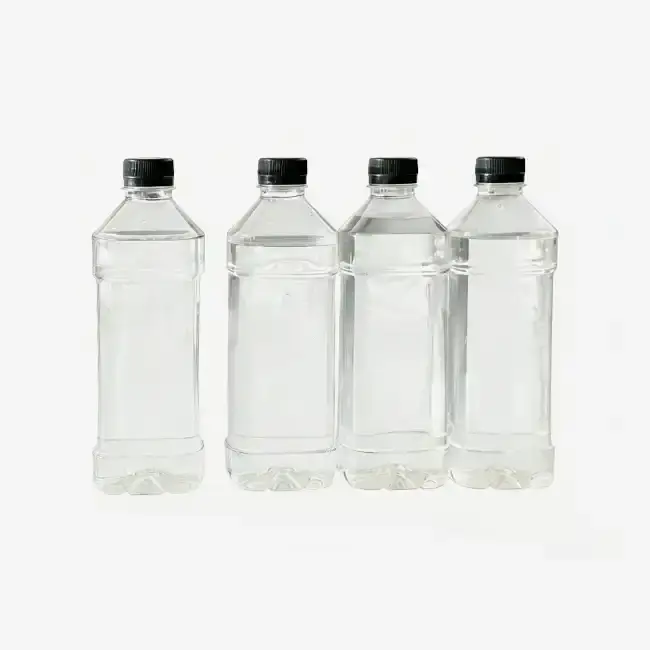
As a deicing liquid, potassium acetate (CH₃COOK, molecular weight 98.14), is easy to mix with water to make a thick brine with low viscosity. It's denser than water (1.25–1.30 specific gravity at 20°C), so it can pass through and under layers of ice instead of sitting on top of them. When metal objects touch it, they don't change their pH level because the pH level is between 7.5 and 9.2. It doesn't have any chloride ions like rock salt or calcium chloride does. Chloride ions are what eat away at asphalt and rust metal at airports.
How It Melts Ice at a Molecular Level
Through a process called colligative depression, the acetate ion lowers the freezing point of water. This is controlled by the amount of dissolved solute particles. At a concentration of 50%, the eutectic point is around -60°C, which is much higher than the thermal safety margins of sodium chloride (-21°C eutectic) or even magnesium chloride (-33°C eutectic). Because of this thermal advantage, the liquid stays liquid and active during the very cold spells that often shut down airports in the Midwest and Northeast of the United States.
Comparative Analysis: Potassium Acetate vs Alternative Deicing Solutions
When purchasing professionals look at runway deicers, they look at more than just the cost per unit. The real financial picture is shaped by the total cost of ownership, which includes fixing equipment, being responsible for the environment, and following the rules. The following are some of the best options for deicing liquid potassium acetate:
- Versus sodium chloride and calcium chloride: Both chloride salts are cheap per tonne but speed up the rusting of aircraft aluminium alloys, concrete beams, and instrument sensors. Federal Aviation Administration (FAA) Advisory Circular AC 150/5370-10 says that chlorine should not be used on the sidewalks of airports. Deicing liquid potassium acetate(CAS NO.: 127-08-2) gets rid of that risk completely, adding years to the useful life of concrete and tools.
- Versus urea-based deicers: Unlike urea-based deicers, urea breaks down into ammonia in stormwater runoff, which is harmful to aquatic life and causes a high Biological Oxygen Demand (BOD) load that is too much for wastewater treatment systems to handle. Biodegradation of deicing liquid potassium acetate quickly turns it into carbon dioxide and water without releasing nitrogen molecules. This means that BOD has a much smaller effect on ecosystems nearby.
- Versus propylene glycol aircraft deicers: Compared to propylene glycol aircraft deicers, glycol-based fluids work well on aircraft surfaces but not on pavement because they get thick at very low temperatures. As low as -60°C, deicing liquid potassium acetate stays a stable liquid, which makes it the better choice for treating runways and taxiways.
These differences in performance directly lead to lower lifecycle costs, fewer times when infrastructure needs to be fixed, and less environmental permit exposure for airport operators.
Application Methods and Best Practices for Runway Deicing
For rollout to work well, time and equipment compatibility are just as important as volume. Anti-icing is what most big U.S. airports do. They put the liquid on before a storm to make a brine layer that keeps ice from sticking to the ground. When compared to reactive deicing after ice has formed, this method cuts the total amount of chemicals needed by up to 30%.
Recommended application guidelines include:
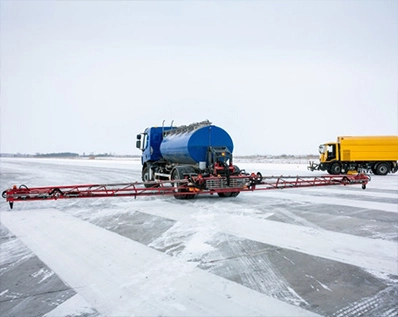
- Pre-treatment (anti-icing): Use 15 to 40 gallons per lane mile, depending on how much rain is expected. Tanker spray booms with regulated nozzles make sure that the whole runway, which can be up to 200 feet wide, is evenly covered.
- Active deicing during storms: Increase the number of times you use it to every 30 to 60 minutes when it rains continuously. The solution gets into the snow and breaks the pavement's bond, which lets motorised ploughs clean the surface.
- Fixed Automated Spray Technology (FAST) on bridges: Deicing liquid potassium acetate works well with FAST systems because it doesn't clog spray heads made of stainless steel or HDPE and doesn't corrode them when it's liquid.
After reviewing these application protocols, it becomes clear that deicing liquid potassium acetate is not just a chemistry swap for chloride salts. It's a change to the whole system that makes things safer and cheaper to maintain.
Procurement Guide: How to Source High-Quality Potassium Acetate Deicing Liquid
When you're sourcing at an airport scale, you need quality that has been checked, not just a low price. Aerospace Material Specification (SAE AMS 1435), which controls aeroplane pavement deicers, should be the standard specification that you ask all suppliers to meet. Key quality verification steps include:
- Requesting a Certificate of Analysis (CoA) that says the CH₃COOK concentration is at least 50%, the pH is between 7.5 and 9.2, the chloride content is less than 0.01%, and the lead content is less than 0.01%.
- After looking over the corrosion test results for ASTM F483 (total immersion) and ASTM F1111 (sandwich corrosion), we can be sure that the product doesn't damage aeroplane metals or runway sensor housings.
- Making sure the seller has ISO 9001, ISO 14001, and ISO 45001 certifications to show that they have quality, environmental, and safety management systems in place.
SHANXI ZHAOYI CHEMICAL ships deicing liquid potassium acetate in 1000L IBC tanks or flexitanks for container shipping. Standard production wait times are 5–7 working days, and in-stock items can be sent out 24 hours a day. FOB, CIF, and DAP are all trade terms that the company accepts. Every order comes with full Safety Data Sheets (SDS) and detailed paperwork. You can find the full catalogue of products and detail sheets at zhaoyichemical.com.
Why Choose Potassium Acetate for Your Airport Runway Deicing Needs?
There is more and more pressure on airport operators and municipal highway contractors across the U.S. to find a balance between safety performance and environmental responsibility. Deicing liquid potassium acetate meets both needs without any problems.
The operational benefits are real. Rapid ice melting within minutes of application keeps the friction coefficients that aeroplane landing gear needs, which lowers the number of go-arounds that happen because of slippery surfaces. The non-corrosive chemistry protects sensors embedded in the pavement, lighting fixtures, and drainage grates. This saves hundreds of thousands of dollars in maintenance costs each year at a major hub airport over the course of a typical ten-year asset cycle.
On the regulatory side, the Environmental Protection Agency (EPA) and many state environmental agencies now check the BOD and nitrogen levels in airport sewage runoff as part of their rules. Switching to deicing liquid potassium acetate helps people follow the rules for Clean Water Act stormwater permits and is in line with FAA sustainability advice. This lowers the chance of violating the permits or having to pay a lot of money for repairs.
Looking ahead, suppliers like SHANXI ZHAOYI CHEMICAL will keep improving corrosion inhibitor packages and making sure that concentrations are stable enough to be stored in warehouses with changing temperatures. This will make sure that the product stays at the top of airport sustainability standards.
Conclusion
Deicing liquid potassium acetate(CAS NO.: 127-08-2) liquid deicers are a clear improvement over older chloride and urea-based products used by airport and infrastructure operators. The science really works at very high temperatures, keeps expensive things safe, and meets stricter and stricter environmental rules. It is easy to make the switch when you buy from a certified manufacturer because they have verified specifications, follow SAE AMS 1435, and have a reliable bulk supply chain. SHANXI ZHAOYI CHEMICAL has been working with global B2B clients in this field for more than 30 years and is ready to provide your operations with the volumes, documentation, and technical support they need.
FAQ
Is potassium acetate safe for vegetation and wildlife near runways?
Deicing liquid potassium acetate quickly turns into carbon dioxide and water. It doesn't release any ammonia or nitrogen chemicals, though. Studies have shown that it is much better for plants and animals in the water than deicers that use urea. To be safe, you should still avoid applying it directly and strongly to plant root zones.
How long does one application remain effective?
And it's cold, dry, and not rainy, an anti-icing coat that was put on right will last for four to eight hours. To keep the ground from sticking when it snows a lot, the sealant should be put on again every 30 to 60 minutes.
Can it be stored in existing carbon steel tanks?
But it's not a good idea to store it for a long time in carbon steel that isn't lined with anything because it will cause corrosion. Containers made of high-density polyethylene (HDPE) or stainless steel 304/316 keep the concentration pure and stop small amounts of sludge from forming.
What is the minimum effective operating temperature?
Even though -60°C is the eutectic freezing point, active deicing works best above -29°C to -35°C. This can change depending on how much rain or snow there is and how windy it is.
Partner With SHANXI ZHAOYI CHEMICAL for Reliable Supply
SHANXI ZHAOYI CHEMICAL is a reliable company that makes deicing liquid potassium acetate. They can make up to 150,000 tons of it every year, have ISO 9001, 14001, and 45001 certifications, and have exported to North America, Europe, and Asia. Checked CoA paperwork, fair bulk prices, and quick technical support are what our team offers. Contact us today at sxzy@sxzhaoyi.com or visit sxzhaoyi.com to request a product sample, SDS, or customized bulk quotation.
References
1. Federal Aviation Administration. (2021). Advisory Circular AC 150/5370-10H: Standards for Specifying Construction of Airports. U.S. Department of Transportation. https://www.faa.gov/documentLibrary/media/Advisory_Circular/AC_150_5370-10H.pdf
2. Blackburn, R. R., Bauer, K. M., Amsler, D. E., Boselly, S. E., & McElroy, A. D. (2004). Snow and Ice Control: Guidelines for Materials and Methods. National Cooperative Highway Research Program Report 526. Transportation Research Board. https://onlinepubs.trb.org/onlinepubs/nchrp/nchrp_rpt_526.pdf
3. SAE International. (2012). AMS 1435C: Fluid, Generic, Deicing/Anti-Icing Runways and Taxiways. SAE International. https://www.sae.org/standards/content/ams1435c/
4. Fischel, M. (2001). Evaluation of Selected Deicers Based on a Review of the Literature. Colorado Department of Transportation Research Branch. https://www.codot.gov/programs/research/pdfs/2001/deicer.pdf
5. Shi, X., Veneziano, D., Xie, N., & Gong, J. (2013). Use of chloride-based ice control products for sustainable winter maintenance: A balanced perspective. Cold Regions Science and Technology, 86, 104–112. https://www.sciencedirect.com/science/article/pii/S0165232X12002182
6. U.S. Environmental Protection Agency. (2012). Effluent Limitations Guidelines and New Source Performance Standards for the Airport Deicing Category. EPA-821-F-12-001. https://www.epa.gov/eg/airport-deicing-effluent-guidelines

USER EVALUATE
Here is the customer's evaluation of us
YOU MAY LIKE
 VIEW MOREAirport Runway Liquid Potassium Formate
 VIEW MOREOilfield Liquid Potassium Formate
 VIEW MOREDeicing Liquid Potassium Formate
- VIEW MOREAgricultural Liquid Potassium Acetate
 VIEW MORESnow Melting Solid Potassium Acetate
 VIEW MOREAcidity Adjustment Sodium Acetate Anhydrous
 VIEW MOREDrilling Solid Potassium Formate
 VIEW MOREPharmaceutical Intermediate Sodium Acetate Anhydrous