



Snow Melting Liquid Potassium Acetate for Large Parking Facilities
Every winter, it's hard to keep up with maintenance at big parking lots. When snow and ice build up on multi-level decks, entrance ramps, and open lots, they become safety hazards and speed up the breakdown of structures. Snow melting liquid potassium acetate (CAS NO.: 127-08-2) is a proven, non-chloride solution that melts snow right away, lowers the freezing point to -35°C, and biodegrades at a rate of 95%. Facility managers and purchasing teams looking for an anti-icing agent that saves concrete buildings, lowers long-term repair costs, and meets environmental standards should consider liquid potassium acetate. It is a technically sound and operationally efficient choice.
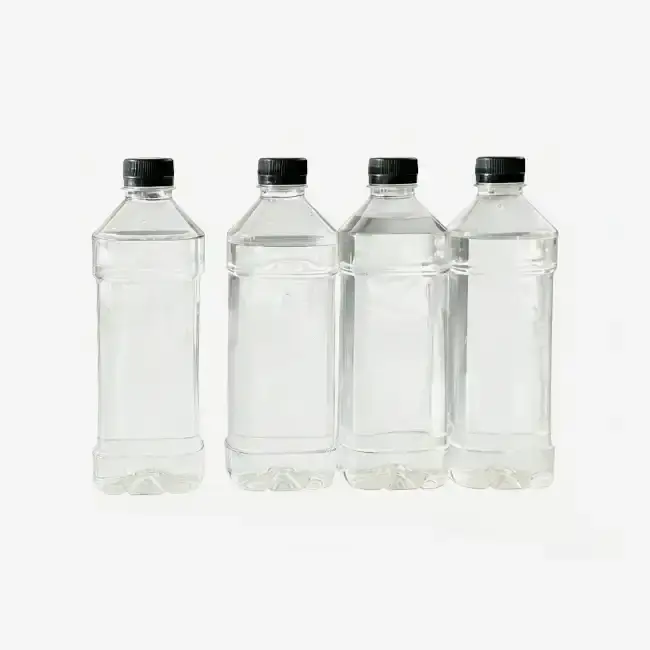
Understanding Liquid Potassium Acetate and Its Properties
It is clear, colourless, and slightly acidic. Its CAS number is 127-08-2. The weight of a potassium acetate molecule is 98.14. The freezing point drops to -35°C at a concentration of 50–60%. This is better than regular chloride salts, which stop working below -9°C. The item has a pH level between 7.5 and 9.2. In other words, it keeps rust rates at 0.03 g/m²·h on carbon steel and keeps metal surfaces safe from damage.
Chemical Stability and Biodegradability
It has a biodegradability rate of at least 95%, which means that microbes break it down quickly into water and carbon dioxide, leaving behind almost no chemical oxygen demand in waste. This behaviour is in line with NPDES release standards that most cities and towns in the U.S. follow. This makes it simple for environmental engineers to follow the rules.
Immediate Activation Advantage
There is no endothermic dissolution lag with liquid granular salts because they are delivered as a ready-to-use liquid. The agent gets into the cracks between the snow and the sidewalk very quickly and melts ≥85% of the snow in an hour at -25°C, which is a level of performance that solid alternatives rarely reach in the same conditions.
Challenges of Traditional De-Icing Methods in Large Parking Facilities
Many people still use sodium chloride, calcium chloride, and glycol-based products, but all of them have risks that get worse over the winter, unlike snow melting liquid potassium acetate. Chlorine ions move into the pores of concrete and start the electrolytic breakdown of steel rebar. One winter cycle can cause cracks that can be seen, and being exposed to the elements all year in an organized parking deck directly leads to expensive fixes that need to be spalled. The American Concrete Institute says that chloride-induced rebar corrosion is the main reason why cold-weather infrastructure's concrete breaks down too quickly.
Operational Limitations of Solid and Glycol Alternatives
Solid salts need to be pre-wetted or spread by machines, and if they are spread unevenly, some areas won't get cleaned. Glycol products have higher metabolic oxygen demand values, which makes them dangerous for the environment near storm drains. Neither format works well with automated spray systems, which are becoming more and more common in modern large parking lots because they make application more consistent and require less work.
Liquid potassium acetate fills these functional gaps. It works directly with fixed spray nozzles and truck-mounted distribution systems because its viscosity is the same everywhere. This means that it covers large deck surfaces evenly without leaving behind any residue or particles.
Application Best Practices for Liquid Potassium Acetate in Large Parking Facilities
When this agent is used properly, it improves both chemical performance and cost-effectiveness. It is usually used in two ways: anti-icing (treatment before a storm) and de-icing (treatment after the snow has piled up). Pre-treatment at an application rate matched to the expected amount of precipitation stops ice from sticking to the ground, which lowers the total amount of product needed for each storm.
Here are the most important things that procurement and operations teams should think about when it comes to applications:
- Equipment compatibility: The product can be used directly with plastic storage tanks, stainless steel pumps, and spray gun systems; it doesn't need any special linings. Standard spray trucks used for farming or city work can handle distribution without any changes.
- Storage conditions: Keep in a building that is dry, well-ventilated, and away from heat and wetness. To stop evaporation, containers must stay closed. As required by safety rules, keep away from chemicals that don't mix. You can get the product in either 1000L IBC tanks or Flexibags, which are both designed to be easily moved in bulk.
- Surface interaction: The alkaline pH range actively passivates metal surfaces on concrete and steel-reinforced structures, which lowers the risk of oxidation. Since there is no white powder left over after evaporation, you don't have to clean up after a storm as you do with salt-based agents.
All of these things for snow melting liquid potassium acetate help cut down on application mistakes, reduce product waste, and make parking facilities last longer. Clear pre-season routines around these points usually lead to measured drops in the amount of money teams spend on reactive maintenance.
Comparing Liquid Potassium Acetate with Alternative De-Icing Agents
A lot of the time, purchasing managers compare potassium acetate to potassium formate, calcium acetate, and magnesium chloride. There are pros and cons to each option that should be carefully considered.
Potassium formate works well at low temperatures, but it is more dangerous to marine life in the short term than products made from acetate. Calcium acetate is harder to make into a stable high-concentration liquid and doesn't dissolve as well as other chemicals. This makes it less useful in automated spray systems. Even though it is sold as a "low-corrosion" chloride, magnesium chloride is still bad for concrete and car undercarriages.
Total Cost of Ownership
Potassium acetate is made by combining acetic acid with potassium hydroxide. This process requires more capital than brine digging, which is why the unit price is higher. But when buying, teams think about the costs of not having to fix steel, using less material during storms, and following environmental rules, the total cost of ownership changes in a good way. In high-traffic multi-level parking lots where structural fixes cost six figures, the difference is worth it just to protect the infrastructure.
Environmental Benchmark
Snow melting liquid potassium acetate meets or goes beyond the environmental standards set by U.S. EPA stormwater management guidelines. It has a biodegradability rating of at least 95% and strict heavy metal limits (Pb ≤0.01%, As ≤0.0004%). Competing chloride products don't break down naturally and build up in the ground and dirt over many seasons.
Procurement Considerations for B2B Clients
Supply consistency that can be counted on is a must for winter activities. If your shipment is late during a storm, you lose all the technical benefits of picking a high-quality de-icing agent. B2B buyers should look at four things about a supplier: their licenses, their production capacity, how reliable their services are, and how much they can customize their products.
Shanxi Zhaoyi Chemical has KOSHER and HALAL approvals as well as ISO 9001, ISO 14001, and ISO 45001 certifications. This shows that they are responsible for quality management across all of their production batches. With a production lead time of 5–7 working days, the plant can make 150,000 tons of goods every year and keeps safety stock on hand for quick delivery. Packaging in 1000L IBC tanks or Flexibags works for both ocean freight in containers and regional distribution plans.
When looking for large amounts of snow melting liquid potassium acetate, buyers should also make sure that the supplier checks each batch's refractive index and density to make sure that the concentration stays between 50 and 60%. Differences in concentration have a direct effect on the freezing point curve and field performance. Shanxi Zhaoyi Chemical makes sure that the quality of the whole process can be tracked, from the time that raw materials are received to the time that finished products are sent out.
Conclusion
Large parking lots need a deicing system like snow melting liquid potassium acetate(CAS NO.: 127-08-2) that keeps the buildings safe, follows environmental rules, and works reliably when it's below zero outside. Liquid potassium acetate meets all of these needs with scientific proof that can be measured. Its non-chloride formula removes the risk of rebar corrosion, its instant liquid activation works better than solid options, and its high biodegradability ensures that buildings comply with stormwater rules. Choosing a certified, high-capacity supplier is the best way for procurement teams that are in charge of winter operations at multiple sites to make sure that they have a steady supply of products throughout the season.
FAQ
Does liquid potassium acetate damage concrete parking structures?
Because it doesn't get into the cracks in concrete, potassium acetate doesn't hurt steel rebar like chloride salts do. It keeps metal surfaces from rusting because its pH is balanced. This means that most civil engineers who work on parking decks think it is safe for concrete.
How does storage affect product stability?
If you store liquid potassium acetate in polyethylene or stainless steel containers that are tightly sealed and kept somewhere dry, well-ventilated, and away from heat and moisture, the concentration will never change. It will never settle or separate into different phases.
Is it safe for use near landscaping and drainage systems?
Yes. This item breaks down quickly in water and dirt because it is recyclable (>95%) and doesn't hurt plants. It releases garbage in line with the NPDES rules that most places in the U.S. follow. How does it work compared to road salt when it's very cold outside?
How does it perform compared to road salt at very low temperatures?
Below about -9°C, road salt stops working as well. At a working concentration, potassium acetate can stay active down to -35°C. This makes it much more reliable during harsh winter events when salt-based agents fail entirely.
Partner with SHANXI ZHAOYI CHEMICAL for Reliable Supply
If you need de-icing products, SHANXI ZHAOYI CHEMICAL has been making them since 1988. Every year, they can make up to 150,000 tons of them, and their quality control methods are ISO-certified. You can trust our snow melting liquid potassium acetate (CAS NO.: 127-08-2) maker to give you expert help 24 hours a day, seven days a week, and to package your order in 1000L IBC tanks or Flexibags. You can email our team at sxzy@sxzhaoyi.com or go to sxzhaoyi.com to get product details or a bulk quote.

References
1. American Concrete Institute — ACI 318: Building Code Requirements for Structural Concrete, 2019.
2. U.S. Environmental Protection Agency — Stormwater Best Management Practice: Winter Road Maintenance, 2010.
3. Transportation Research Board — NCHRP Report 577: Guidelines for the Selection of Snow and Ice Control Materials, 2007.
4. ASTM International — ASTM B117: Standard Practice for Operating Salt Spray Apparatus, 2019.
5. Journal of Cold Regions Engineering — "Comparative Corrosion Effects of Chloride and Acetate-Based Deicers on Reinforced Concrete Structures," American Society of Civil Engineers, 2015.
6. SAE International — AMS 1435: Fluid, Generic, Deicing/Anti-Icing Runways and Taxiways, 2018.

USER EVALUATE
Here is the customer's evaluation of us
YOU MAY LIKE
 VIEW MOREIndustrial Sodium Acetate Trihydrate
 VIEW MOREFood-Grade Sodium Acetate Trihydrate
 VIEW MOREFresh-Keeping Sodium Diacetate
 VIEW MOREFeed pH Adjustment Sodium Diacetate
 VIEW MOREDeicing Solid Sodium Formate
 VIEW MOREOilfield Liquid Potassium Acetate
 VIEW MOREPharmaceutical Excipient Sodium Acetate Anhydrous