



How Does Deicing Liquid Potassium Acetate Improve Runway Ice Control?
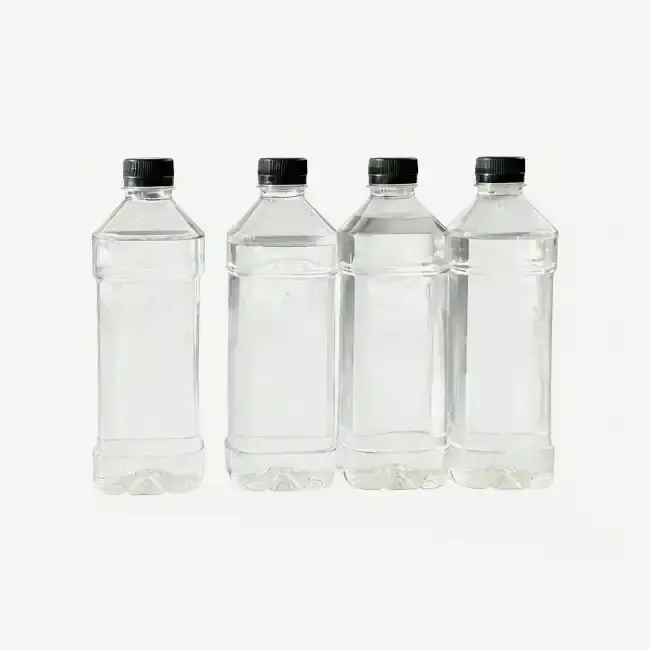
Deicing liquid potassium acetate (CAS No. 127-08-2, CH₃COOK) makes it easier to keep runways clear of ice by lowering the freezing point of water to as low as -60°C (-76°F). This creates a layer of salty water that stays on the ground and stops ice from sticking to it. This clear, slightly sour liquid does not corrode airplane metals or concrete cement like chloride salts do. Because it breaks down quickly and doesn't use much biological oxygen, it is the best deicing agent for airport runways around the world, where safety, long-lasting infrastructure, and environmental responsibility are all musts
Understanding Potassium Acetate Deicing Liquid
What Makes Potassium Acetate Different From Traditional Deicers?
Deicing liquid potassium acetate is a cryoscopic agent that turns water into a solution and breaks the network of hydrogen bonds that hold water molecules together, allowing the water molecules to form ice crystals instead. The liquid has a specific gravity of 1.25–1.30, which is high enough to break through layers of packed-down ice and snow. Its molecular weight is 98.14, and its concentration is 50–60%. But this is not at all like solid chloride salts, which break down through exothermic reactions and leave behind acidic film on runways.
Practical Application in Airport Settings
Before storms happen, airport ground workers use truck spray booms to put down the solution. This makes an anti-icing barrier that keeps friction coefficients within safe landing ranges. The product works perfectly with Fixed Automated Spray Technology (FAST) systems that are used on bridges and taxiways. It gives even covering without spray tubes getting clogged. Deicing liquid potassium acetate-based fluids must pass Total Immersion Corrosion testing (ASTM F 483) and Sandwich Corrosion testing (ASTM F 1111) before they can be approved by SAE AMS 1435 specifications, which are the rules for aerospace materials used on runways.
Storage and Handling Essentials
Proper storage keeps the quality of a product over time. The liquid can be kept for a very long time if it is kept in sealed cases made of stainless steel (304/316) or high-density polyethylene (HDPE). It needs to be kept in a warehouse that is dry, well-ventilated, and away from heat, moisture, and things that don't work with it. After two years of storage, the pH and concentration should be checked again every year. The product is sold by SHANXI ZHAOYI CHEMICAL in 1000L IBC tanks and Flexibags, both of which are designed to be reliable for bulk shipping.
Evaluating the Effectiveness and Safety of Potassium Acetate Deicers
Performance Benchmarks That Matter
Field data from airport operations regularly show that pre-treatment with solutions based on deicing liquid potassium acetate makes it much easier for ice to stick to pavement than when the pavement is not treated. The pH range of 7.5 to 9.2 buffers the acidity on the surface and saves metal sensors and runway lighting gear that are embedded in the material. Heavy metal levels stay well below what is allowed by law: lead (Pb) levels stay below 0.01%, arsenic (As) levels stay below 0.0004%, and chloride levels stay below 0.01%. These levels are low enough to meet EPA environmental discharge limits and FAA pavement safety standards.
Acetate-based runway deicers also work better than glycol-based ones in one important area: they can handle more environmental load. The runoff of ethylene glycol creates a Biological Oxygen Demand load that can make nearby rivers lose oxygen. Deicing liquid potassium acetate(CAS NO.: 127-08-2) breaks down quickly at low temperatures without releasing dangerous nitrogen molecules. This is a big difference from urea, which breaks down into ammonia that is bad for aquatic life.
Here are the core safety and performance attributes that procurement teams consistently prioritize:
- Non-corrosive chemistry: Having no chloride content stops the electrochemical attack on cadmium and magnesium aircraft metals, which increases the service life of the airframe and lowers the number of unplanned repair events.
- Low aquatic toxicity: Runoff that gets into drainage systems doesn't pose much of an ecological risk because it breaks down quickly in aerobic conditions at temperatures below zero. This helps airports' stormwater compliance programs.
- Non-flammable profile: Flash point is higher than 100°C, so bulk storage next to busy fuelling zones is safe and doesn't need any special fire control requirements.
These attributes collectively reduce both operational liability and lifecycle infrastructure costs—two metrics that carry weight in any capital procurement review.
Comparing Potassium Acetate With Other Deicing Liquids: Which Suits Your Needs?
Choosing the right runway deicer involves matching chemical properties to site-specific conditions. The table below outlines how deicing liquid potassium acetate stacks up against common alternatives across four decision factors.
| Deicer | Effective Temp. | Corrosion Risk | Eco Profile | SAE AMS Compliant |
|---|---|---|---|---|
| Potassium Acetate | -60°C to 0°C | None (non-chloride) | Ideal | Yes (AMS 1435) |
| Calcium Chloride | Low to -29°C | High (chloride) | Poor | No |
| Magnesium Acetate | Down to -20°C | Low | Good | Limited |
| Ethylene Glycol | Down to -50°C | Low | Poor (high BOD) | Yes (AMS 1424) |
Calcium chloride melts quickly at normal temperatures, but it speeds up the scaling of concrete and the rusting of steel rebar, which raises the cost of repairing pavement over a five-year maintenance cycle. Ethylene glycol meets performance standards for aerospace, but it causes a lot of BOD to build up in airport drainage systems, which puts airports at risk under the Clean Water Act. Magnesium acetate is better for the environment, but it stops working at temperatures below -20°C, which makes it less useful in places like Minnesota, Wisconsin, and Alaska in the northern U.S.
Deicing liquid potassium acetate(CAS NO.: 127-08-2) occupies the most favorable position for airports managing aircraft safety, infrastructure longevity, and environmental compliance simultaneously. Its compliance with SAE AMS 1435 gives procurement teams a strong, specification-backed justification for selection.
Procurement Guide for Potassium Acetate Deicing Liquid
What to Verify Before Placing a Bulk Order
To find deicing liquid potassium acetate on a large scale, you need to look at more than just the price per litre. Teams in charge of buying things should ask for a Certificate of Analysis (CoA) that says the specific gravity, pH, and CH₃COOK concentration are all within acceptable ranges. For every shipment paperwork package, there should be corrosion test data according to ASTM F 483 and ASTM F 1111. The MSDS paperwork must prove that the substance is non-flammable and that the right emergency measures have been followed.
Since 1988, SHANXI ZHAOYI CHEMICAL has been in business and can make 150,000 tons of acetate-series goods every year. The company has approvals for ISO 9001, ISO 14001, and ISO 45001, as well as KOSHER and HALAL for applications that need to be sure of their stability. Standard production wait times are 5–7 working days, and in-stock items can be delivered 24 hours a day. FOB, CIF, and DAP are all flexible trade terms that work for both North American buyers and area wholesalers who handle operations for selling in North America.

Real-World Benefits of Potassium Acetate in Runway Ice Control
When airports switch from urea- or chloride-based deicing programs to deicing liquid potassium acetate anti-icing routines, they always report real operating gains. By not having to use plows as often during light weather, money is saved on fuel and work. Since chloride-induced spalling doesn't happen as often, it takes longer to check the sidewalk. Corrosion-related failure rates are much lower for airfield lights and sensor systems that are built into the surface of the runway.
The potassium acetate solution used to melt ice on landings can also be used as a low-temperature heat transfer fluid and as a balancing liquid in mining and drilling equipment that works in arctic conditions. This gives companies that manage a variety of cold-weather assets more options when they buy things. Because it is thermally stable and doesn't catch fire, it is a good choice for places where freeze protection and material compatibility are needed at the same time.
New studies looking into better deicing liquid potassium acetate mixtures are looking into higher-concentration blends and combination inhibitor packages that make the coverage last longer during heavy precipitation events. This shows that this product category will continue to evolve.
Conclusion
Deicing liquid potassium acetate (CAS NO.: 127-08-2) has a lot of great qualities that no other product can match. It can be used at very low temperatures (down to -60°C), doesn't cause chloride rust, decomposes quickly in nature, and meets SAE AMS 1435 standards. People who work at airports, on highways, or own infrastructure and care about both safety and the environment will find this science very useful right now. It's becoming more and more important to switch to acetate-based anti-icing programs every year as government rules in the U.S. get stricter on chloride runoff and glycol BOD loading.
FAQ
Is potassium acetate safer than traditional rock salt for runways?
Yes. Rock salt and calcium chloride both have chloride ions in them that break down airplane parts, airport sensors, and concrete supports. Because it only contains 0.01% chloride, deicing liquid potassium acetate doesn't dissolve. It is also much better for underwater life, which is important for airports that need cleanup permits under the Clean Water Act.
How long does potassium acetate remain effective after application?
A pre-treatment spray keeps the anti-icing working for several hours in normal airport conditions with mild weather. How long the cover is based on how much snow or rain comes, how hot the road is, and how much water is lost when snow or rain melts. Most of the time, reapplication is planned based on real-time monitoring of the pavement's condition.
Can potassium acetate work at extremely low temperatures?
Potassium acetate, which is used to melt ice, has a eutectic point of about -60°C (-76°F). In real life, active deicing works best when the temperature is between -29°C and -35°C (-20°F to -30°F). However, this depends on the air temperature and how quickly it gets wet from snow or rain.
Is this product compatible with automated spray systems?
Yes. You can directly use it with Fixed Automated Spray Technology (FAST) systems because it has a low viscosity and stays a solid liquid form. Viscosity doesn't cause any clogging or flow problems.
Partner With SHANXI ZHAOYI CHEMICAL for Reliable Runway Deicing Supply
Since 1988, SHANXI ZHAOYI CHEMICAL has sold certified acetate-series products all over the world. As a reliable company that makes deicing liquid potassium acetate, we back up every large package with full COA paperwork, quality control that is ISO-certified, and quick technical support. Reach our team at sxzy@sxzhaoyi.com or visit zhaoyichemical.com to request product specifications, safety documentation, or a commercial sample. Your runway safety program deserves a chemistry partner that meets every specification the first time.
References
1. Federal Aviation Administration. (2020). Airport Winter Operations: Snow and Ice Control. FAA Advisory Circular AC 150/5200-30E. https://www.faa.gov/documentLibrary/media/Advisory_Circular/150-5200-30E.pdf
2. SAE International. (2012). AMS 1435: Fluid, Generic, Deicing/Anti-Icing Runways and Taxiways. SAE Aerospace Material Specification. https://www.sae.org/standards/content/ams1435/
3. ASTM International. (2019). ASTM F483: Standard Test Method for Total Immersion Corrosion Test for Aircraft Maintenance Chemicals. https://www.astm.org/f0483-19.html
4. Transportation Research Board. (2007). ACRP Report 14: Deicing Planning Guidelines and Practices for Stormwater Management Systems. National Academies Press. https://www.nap.edu/catalog/23092/deicing-planning-guidelines-and-practices-for-stormwater-management-systems
5. Levelton Consultants Ltd. (2008). Guidelines for the Selection of Snow and Ice Control Materials to Mitigate Environmental Impacts. Transportation Association of Canada. https://tac-atc.ca/sites/default/files/docs/resources/snowice-guidelines.pdf
6. Shi, X., Akin, M., Pan, T., Fay, L., Liu, Y., & Yang, Z. (2009). Deicer impacts on pavement materials: Introduction and recent developments. Open Civil Engineering Journal, 3(1), 16–27. https://benthamopen.com/contents/pdf/TOCIEJ/TOCIEJ-3-16.pdf

USER EVALUATE
Here is the customer's evaluation of us
YOU MAY LIKE
 VIEW MOREPastry Sodium Acetate Trihydrate
 VIEW MOREFresh-Keeping Sodium Acetate Trihydrate
 VIEW MOREFeed-Grade Sodium Diacetate
 VIEW MOREOilfield Liquid Potassium Formate
 VIEW MOREFur Processing Solid Sodium Formate
- VIEW MOREAgricultural Liquid Potassium Acetate
 VIEW MORECatalytic Sodium Acetate Trihydrate
 VIEW MOREDrilling Solid Potassium Formate