



Deicing Liquid Potassium Acetate for Bridge Deck Winter Maintenance
When winter storm systems move across the United States, bridge decks become the most vulnerable points in any road network. Unlike ground-level pavement, elevated bridge surfaces lose heat from both above and below, causing ice to form faster and bond more aggressively. Deicing liquid potassium acetate(CAS NO.: 127-08-2) has emerged as the professional standard for bridge deck winter maintenance, offering non-chloride ice control that protects concrete, steel rebar, and automated spray systems simultaneously. With a freezing point depression reaching -60°C (-76°F) and rapid biodegradability, this solution addresses both infrastructure and environmental compliance demands that modern agencies cannot afford to overlook.
Understanding Potassium Acetate Deicing Liquid and Its Role in Bridge Deck Maintenance
What Makes Potassium Acetate Chemically Distinct?
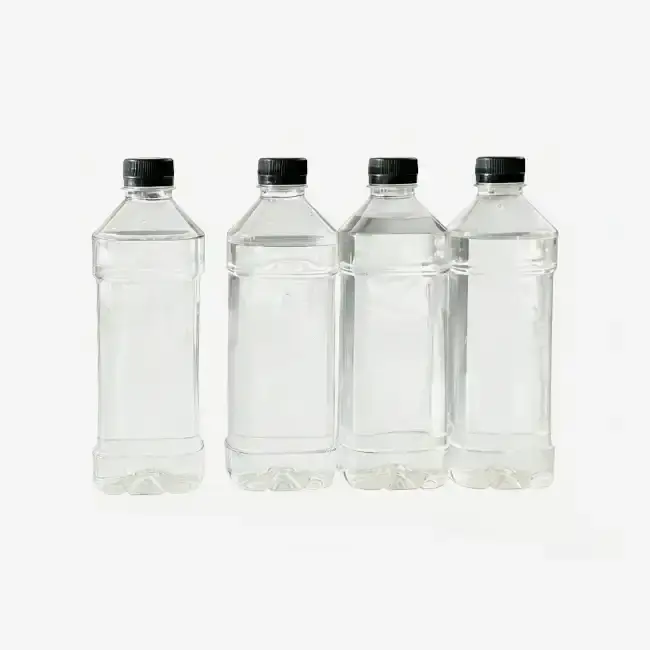
Potassium acetate is a clear, colorless liquid with a slightly sour taste (CAS No. 127-08-2, molecular formula CH₃COOK, molecular weight 98.14). At a working concentration of 50–60% w/w, it is a strong cryogenic agent that breaks down hydrogen bonds in ice crystals and lowers the freezing point much more than any chloride-based product can do at the same application rates. With a specific gravity of 1.25 to 1.30, the solution can directly cut through layers of ice, breaking the bond between the ice and the ground before it can be removed by machines.
Sodium chloride and calcium chloride, which are common road salts, melt ice quickly and cheaply, but they damage reinforced concrete in well-known ways. Chloride ions move through the pores of concrete, causing embedded steel rebar that is embedded to rust and speeding up the spalling process. But that corrosion risk is too high for bridge decks, where structural integrity is important for public safety. Deicing liquid potassium acetate has a chloride level of less than 0.01%, which stops chloride-induced damage and greatly increases the time between maintenance visits.
In terms of regulations, potassium acetate meets the SAE AMS 1435 standards that are commonly used when buying infrastructure for airports and bridges. Its pH range of 7.5 to 9.2 makes it a mildly alkaline buffer that neutralizes acidic surfaces without hurting painted or rusted metal parts.
Benefits and Application Guidelines for Potassium Acetate in Bridge Deck Winter Maintenance
Core Performance Advantages Worth Knowing
When looking for an acetate-based liquid deicer like deicing liquid potassium acetate, bridge maintenance engineers and municipal procurement teams always list three performance pillars. In short, these are the main benefits this product offers:
- Corrosion inhibition at the structural level: Heavy metal content is tightly controlled, with iron (Fe) at a level of 0.0002%, lead (Pb) at a level of 0.01%, and arsenic (As) at a level of 0.0004%. This means that the fluid doesn't pose a galvanic threat to the reinforcement steel that is embedded in bridge deck slabs, a protection standard that chloride salts can't really match.
- Low-temperature reliability down to -60°C: Many competing liquid deicers stop working around -20°C, but deicing liquid potassium acetate keeps lowering the freeze point well past that point. In the field, practical application still works between -29°C and -35°C when diluted, so it can be used in all kinds of cold weather in northern US states.
- Biodegradability without toxic nitrogen loading: Urea-based deicers break down into ammonia and put a lot of biological oxygen demand (BOD) on stormwater systems. Potassium acetate, on the other hand, breaks down quickly and cleanly, which makes it a good choice under EPA stormwater discharge permits.
These benefits directly lead to lower lifetime costs for bridge owners, fewer fixes needed in an emergency, and better compliance with state environmental agencies.
When it comes to use, Fixed Automated Spray Technology (FAST) systems that are installed on major bridge decks work well with liquid potassium acetate because it doesn't clog the nozzles. When it comes to chemical use and surface protection, anti-icing applications—like washing before it rains—always do better than reactive deicing. Concentration stability is maintained indefinitely when stored in stainless steel 304/316 or HDPE tanks; pH and specific gravity should be checked again every year after two years of storage.
Comparing Potassium Acetate with Other Deicing Agents for Bridge Decks
How It Stacks Up Against Chlorides, Glycols, and Solid Deicers?
To pick the best deicer for a bridge deck buying decision, you have to weigh how well it works against how safe it is for the environment and how well it works with other materials. When you compare those two substances, deicing liquid potassium acetate stands out.
Calcium chloride works well at low temperatures, but over time, it speeds up the cracking of concrete and the rusting of steel. While sodium acetate has the same non-chloride profile, it has a higher BOD load and a lower freeze-point performance. Ethylene glycol has a similar effect on lowering the freeze point, but it is subject to stricter rules about its effects on aquatic life and is listed as an ongoing worry in watershed management plans.
It can be hard to apply solid deicers evenly on bridge decks, whether they are granular chlorides or solid acetate pellets. Granules that are rough, move around in the wind, and cause equipment to wear down make them less useful for automatic systems. When regulated spray booms are used to apply liquid potassium acetate, it covers precisely and consistently, and the quantity can be controlled, which is very important for infrastructure managers who are in charge of large bridge networks.
Procurement Insights for Potassium Acetate Deicing Liquid in Global B2B Markets
What Should Procurement Teams Evaluate Before Placing Orders?
When buying a lot of deicing liquid potassium acetate, you need to pay attention to the qualifications of the suppliers, the ability to track the products, and their ability to handle operations. Municipalities and highway companies who are in charge of seasonal inventory should give priority to suppliers who have ISO 9001, ISO 14001, or ISO 45001 certifications. These certifications prove quality standards for manufacturing, environmental management, and worker safety. Every package should have a Certificate of Analysis (CoA) that confirms the specific gravity, pH, CH₃COOK concentration, and heavy metal limits.
For efficient transportation, the shape of the packaging is important. The 1000L IBC tank works well for depot-based operations that can use forklifts, and flexitank container shipping lowers the cost of freight per unit for regular contracts that involve a lot of goods. Standard orders have lead times of 5–7 working days, and kept items can be fulfilled 24 hours a day. This means that procurement teams can keep winter stocks low without worrying about supply interruptions during peak demand times.
It is common to ask for a sample of deicing liquid potassium acetate before placing a large order. Suppliers with a good reputation will give you samples when you ask for them and provide technical datasheets that help with internal specification reviews.
Ensuring Success with Potassium Acetate: Case Studies & Best Practices
Lessons from Real-World Winter Operations
By switching to liquid deicers based on acetate, bridge agencies in the northern United States and Europe have seen real benefits. According to transportation research released by state DOTs, departments that used pre-treatment anti-icing protocols, which included spreading deicing liquid potassium acetate 30 to 60 minutes before it was expected to rain, used 30 to 50 percent less material than departments that spread reactive salt. Concrete scaling incidents on FAST-equipped bridges went down a lot after chloride products were phased out. Over five-year evaluation periods, maintenance costs went down as well.
If procurement and engineering teams are thinking about using potassium acetate for bridge deck maintenance, they should make sure that the FAST system nozzle is compatible with the viscosity of the liquid acetate, that the material in the storage tank is compatible, that seasonal demand forecasts are made to help with bulk order planning, and that the CoA parameters match the requirements before accepting delivery. These steps get rid of the most common problems that come up in operations and procurement.

Conclusion
Deicing liquid potassium acetate(CAS No.: 127-08-2) is a tried-and-true method for keeping bridge decks in good shape during the winter. Its non-chloride chemistry protects building materials, its environmental profile helps with following the rules, and its ability to work with automated spray systems makes it very accurate. Switching to acetate-based liquid deicing is a smart financial and technical choice for infrastructure agencies that need to protect long-term assets and meet yearly safety requirements.
FAQ
Is potassium acetate safe for all bridge deck materials?
Deicing liquid potassium acetate can be used on concrete, common steel alloys, painted metals, and coated surfaces. Its chloride level of less than 0.01% stops the main thing that causes rebar to rust in reinforced concrete.
How does it compare environmentally to road salt?
Potassium acetate breaks down quickly in living things without giving off chlorides or harmful nitrogen compounds. Salts from the roads build up in groundwater and soil. Potassium acetate has a much smaller effect on the environment when it is released into stormwater systems, according to EPA rules.
What are best practices for storage?
Keep in sealed HDPE or 304/316 stainless steel containers in a dry, well-ventilated warehouse away from heat and things that won't work with them. Under the right conditions, the shelf life is infinite; check the concentration and pH again after two years.
What is the minimum effective operating temperature?
The product keeps the ice from forming between -29°C and -35°C when diluted in the field. This covers normal winter temperatures in the northern US states and along the border with Canada.
Can it be used in automated spray systems?
Because it is a liquid with low viscosity and doesn't clog, it can be used with FAST systems and tanker spray booms for bridge and runway operations.
Partner with SHANXI ZHAOYI CHEMICAL for Reliable Deicing Supply
Since 1988, SHANXI ZHAOYI CHEMICAL has been making goods in the acetate line. They can make up to 150,000 tons of them every year and have certifications for ISO 9001, ISO 14001, ISO 45001, KOSHER, and HALAL. As a reliable deicing liquid potassium acetate(CAS NO.: 127-08-2) manufacturer, we can send large orders in 1000L IBC tanks or flexitanks and provide full CoA documentation and technical support. You can email our team at sxzy@sxzhaoyi.com or go to sxzhaoyi.com right now to ask for a sample, talk about your needs, or get bulk pricing.
References
1. Transportation Research Record: Journal of the Transportation Research Board, 2019.
2. Cold Regions Science and Technology — Elsevier, 2021.
3. Journal of Materials in Civil Engineering — ASCE, 2018.
4. SAE International Journal of Materials and Manufacturing, 2020.
5. Journal of Environmental Management — Elsevier, 2022.
6. Public Works Management & Policy — SAGE Publications, 2017.

USER EVALUATE
Here is the customer's evaluation of us